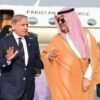
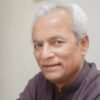
ISLAMABAD: Federal Minister for Finance and Revenue Muhammad Aurangzeb on Thursday hinted that fuel prices in Pakistan could see another increase in the coming days.
The warning comes shortly after the government imposed a steep hike in petroleum prices, raising petrol and diesel rates by Rs55 per litre due to rising international oil prices linked to escalating tensions in the Middle East.
Following the increase, petrol is now priced at Rs321.17 per litre, while diesel has climbed from Rs275.70 to Rs335.86 per litre, adding to the financial strain on consumers.
Aurangzeb shared these remarks during a meeting of the Senate Standing Committee on Finance and Revenue, chaired by Saleem Mandviwala. He explained that the government is implementing austerity measures under the directives of Prime Minister Shehbaz Sharif, but noted that fluctuating regional developments and global oil markets may force further adjustments in fuel prices.
The finance minister also revealed that the prime minister has formed a ministerial committee to closely monitor petroleum supplies and prices on a daily basis.
“The regional situation is evolving rapidly, and decisions regarding the procurement of petroleum products must be taken swiftly,” Aurangzeb said.
He also informed lawmakers that Qatar has declared force majeure due to the ongoing conflict, which has disrupted Pakistan’s LNG imports. As a result, an LNG shipment that previously cost around $25 million is now costing nearly $100 million.
Aurangzeb further told the committee that the government is considering temporarily shutting down six urea fertilizer plants because of excess stock, noting that fertilizer reserves in the country are currently higher than last year.
He pointed out that the fuel crisis in some countries is even more severe, citing Sri Lanka and Bangladesh, where authorities have implemented fuel rationing.
Meanwhile, opposition leaders strongly criticized the government’s decision to raise petroleum prices, warning that the move would further accelerate inflation and deepen economic hardship.
In a statement on X, Hafiz Naeem ur Rehman, chief of Jamaat-e-Islami, condemned the price hike and called it unacceptable. He argued that when global oil prices had dropped to a five-year low earlier, the government increased the petroleum levy instead of passing relief to the public. Now, with prices rising again, the financial burden is once more being placed on citizens, he said.