ISLAMABAD: Pakistan on Thursday rejected reports claiming that Chief of Defence Forces (CDF) and Chief of Army Staff (COAS) Field Marshal Asim Munir visited Tehran as an envoy of US President Donald Trump, describing such reports as “misleading and factually incorrect”.
Foreign Office spokesperson Tahir Andrabi said Field Marshal Munir’s August 24 visit to Iran was undertaken solely as part of Pakistan’s continuing efforts to mediate between Washington and Tehran and help bring an end to the ongoing US-Iran conflict.
Speaking at his weekly media briefing, Andrabi said the visit focused on reducing regional tensions, breaking the military deadlock, reopening the Strait of Hormuz and exploring ways to reach a negotiated settlement.
“The discussion during the visit focused on regional de-escalation, breaking the military stalemate and exploring a negotiated settlement to restore regional peace and stability,” he said.
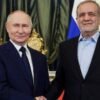
During his visit to Tehran, Field Marshal Munir met Iranian President Masoud Pezeshkian, Supreme Leader’s representative on the Supreme National Security Council Mohsen Rezaei, Parliament Speaker Bagher Ghalibaf, Foreign Minister Abbas Araghchi and Interior Minister Eskandar Momeni.
According to the Inter-Services Public Relations (ISPR), the two sides discussed efforts to reopen the Strait of Hormuz, secure an expedited end to the conflict and promote a peaceful resolution of regional disputes.
Pakistan has played an active role in efforts to bridge differences between Iran and the United States since the conflict erupted following US and Israeli strikes on Iran on February 28. Islamabad also brokered a two-week ceasefire on April 8 after six weeks of fighting and has continued to facilitate communication between Washington and Tehran.
Andrabi said Pakistan remained engaged with its brotherly countries in sincere and coordinated efforts to resolve the crisis in the Middle East and Gulf region.
He said the Iranian leadership had appreciated Pakistan’s efforts for de-escalation and regional peace, adding that Islamabad remained committed to playing a constructive role in bringing Washington and Tehran closer to a negotiated settlement.
Pakistan ready for state-level engagement with Afghanistan
Responding to a question regarding a proposal by Afghanistan’s interim interior minister for a bilateral mechanism, the Foreign Office spokesperson said Pakistan was prepared to engage Kabul in a state-level dialogue to address outstanding bilateral issues.
However, he stressed that any such engagement would depend on the Afghan side taking concrete and verifiable action to ensure that its territory was not used for terrorist activities against Pakistan.
Andrabi said Pakistan sought effective border management and credible counterterrorism measures from Kabul.
“Pakistan is ready for institutional engagement with Afghanistan, provided that it results in verifiable counterterrorism measures,” he said.
The Foreign Office also urged the Afghan interim government to fulfil its international obligations, including commitments under the Doha framework.
The spokesperson further called on Kabul to prevent banned groups, including the Tehreek-e-Taliban Pakistan (TTP) and Balochistan Liberation Army (BLA), from using Afghan territory for activities against Pakistan.