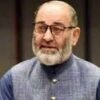
WANA: A senior figure of Jamiat Ulema-e-Islam (Fazl) and prominent religious scholar, Maulana Hafiz Sultan Muhammad, lost his life in a terrorist attack on Saturday in Wana, the headquarters of Lower South Waziristan, according to police and party sources. His young daughter sustained injuries in the explosion.
Police officials said the attackers used a remote-controlled improvised explosive device (IED), which had been planted near a religious seminary. The device was detonated as Maulana Hafiz Sultan Muhammad passed through the area. At the time of the attack, he was serving as the district president of Wafaq-ul-Madaris al-Arabia.
The blast left the cleric critically wounded. He was immediately shifted to Dera Ismail Khan for medical treatment but succumbed to his injuries before reaching the hospital.
Lower South Waziristan District Police Officer Muhammad Tahir Shah Wazir confirmed that a full-scale investigation has been launched. He stated that law-enforcement agencies are examining all possible angles, while forensic evidence collected from the scene is being analyzed to trace those involved.
JUI-F leaders condemned the attack, stating that it reflects the ongoing threats faced by religious scholars who promote peace and moderation in tribal regions such as South Waziristan and Bajaur. The party noted that these areas have repeatedly witnessed militant violence.
The party recalled that six months earlier, JUI-F’s Lower South Waziristan district head, Maulana Abdullah Nadeem, was critically injured in a bomb explosion and is still undergoing treatment. Another former district chief, Maulana Mirza Jan, was also killed in a similar attack in the past.
JUI-F chief Maulana Fazlur Rehman expressed profound sorrow over the killing, calling Maulana Hafiz Sultan Muhammad a brave and devoted colleague. In a statement shared on X, he said the attack was an assault on peaceful, democratic, and moderate ideology that the party has represented for decades.
He reaffirmed that JUI-F would continue its constitutional and peaceful struggle despite such losses and urged state institutions to take concrete steps to restore peace, ensure the safety of religious scholars, and bring those responsible to justice.