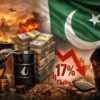
ISLAMABAD: The government has sharply increased fuel prices, petrol prices have surged by Rs137.24 per litre, pushing the new price to Rs458.41. Diesel saw an even steeper rise of Rs184.49 per litre, with the revised rate set at Rs520.35
At a joint press briefing, Petroleum Minister Ali Pervaiz Malik and Finance Minister Muhammad Aurangzeb announced that petrol prices have surged by Rs137.24 per litre, pushing the new price to Rs458.41.
Diesel saw an even steeper rise of Rs184.49 per litre, with the revised rate set at Rs520.35. Officials confirmed that the new prices took effect from midnight following the issuance of a formal notification.
Changes in Petroleum Levy
According to sources, the petroleum levy on petrol has been increased by Rs55.24, bringing it to Rs160.61 per litre. In contrast, the levy on diesel has been completely withdrawn, down from Rs55.24 per litre.
Relief Through Targeted Subsidies
Speaking on the occasion, Finance Minister Muhammad Aurangzeb said the decision was made after consultations at the highest level, adding that relief measures would focus on lower-income segments.
Under the revised plan:
Motorcycle owners will receive a subsidy of Rs100 per litre on up to 20 litres monthly.
Intercity public transport operators will get Rs100 per litre relief on diesel.
Goods transporters will be provided a monthly subsidy of Rs70,000.
Additional support will be extended to railways to help control fares.
Global Pressures Behind Decision
Petroleum Minister Ali Pervaiz Malik attributed the increase to a sharp rise in global oil prices amid ongoing regional tensions. He noted that diesel prices in the international market have crossed $250 per barrel. He also pointed to disruptions in the Strait of Hormuz a critical global oil transit route as a key factor driving the surge in energy prices.
The minister said the government had tried to absorb the impact through austerity measures but was ultimately compelled to pass on the burden due to international commitments.
He added that the government is moving away from blanket subsidies, focusing instead on targeted assistance to ensure relief reaches those who need it most.