HYDERABAD: The Sindh Health Department has suspended seven healthcare workers and sought explanations from seven senior hospital officials following the deaths of five dog-bite victims within three weeks despite their reported treatment at anti-rabies facilities.
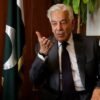
The action was taken on the directives of Sindh Chief Secretary Asif Hyder Shah after an investigation found apparent gaps in the management of anti-rabies cases.
The suspended personnel include doctors, a dispenser, a lady health visitor and a midwife posted at health facilities in Tando Muhammad Khan and Hyderabad.
The five victims were identified as 48-year-old Shahnawaz of Shahdadpur, 55-year-old Shakeel Ahmed of Tando Allahyar, five-year-old Farman of Kotri, six-year-old Rayan Hussain of Hyderabad and 35-year-old Begum of Tando Muhammad Khan.
An official involved in monitoring anti-rabies cases said 38 rabies-related deaths had been reported across Sindh up to August this year, making the latest fatalities a major concern for health authorities.
Health department investigates treatment gaps
Chief Secretary Asif Hyder Shah said the disciplinary action was intended to identify weaknesses in the system rather than merely punish individuals.
“We are tracking each and every case of dog-bite mortality,” he said, adding that authorities were examining how fatalities occurred despite the availability of anti-rabies vaccine (ARV) and rabies immunoglobulin (RIG).
Officials reviewed the medical records of all five recent victims to determine whether the prescribed treatment protocol had been followed.
The provincial government had already established a digital monitoring system, including an Anti-Rabies Dashboard, to track dog-bite patients, treatment schedules and vaccine availability across Sindh.
The system was introduced after 22 dog-bite deaths were reported last year.
278 anti-rabies units now meet WHO standards
Earlier assessments found that although ARV was available at hundreds of hospitals and health centres, many facilities did not comply with World Health Organisation standards.
Following subsequent reforms, authorities said 278 anti-rabies treatment units across Sindh now comply with WHO protocols.
Of these, 112 have been designated referral centres, with one centre in each taluka. Round-the-clock medical staff have been assigned there, while RIG is administered by trained personnel because the medicine must be injected directly around the bite wound.
Officials said investigations into recent deaths revealed cases where patients received ARV but did not receive RIG, while in some instances bite wounds were either overlooked or improperly managed.
Six-year-old’s case highlights alleged protocol violations
The case of six-year-old Rayan Hussain has emerged as one example of the treatment gaps being examined.
According to a doctor familiar with the case, Rayan was initially taken to Shah Bhitai Hospital in Latifabad after being bitten by a dog and was later shifted to Liaquat University Hospital (LUH). He had also suffered a head injury during the attack.
The doctor said the wound should have been thoroughly washed and assessed under the anti-rabies protocol. Instead, the head injury was reportedly treated as an ordinary wound and stitched at the initial hospital.
At LUH, the child was treated at the Child Life Foundation facility, where the wound was allegedly not reassessed to determine whether it had resulted from the dog attack.
Rayan was subsequently discharged, while officials said it remained unclear whether he received all required ARV doses, despite his case being recorded on the government dashboard.
Officials also cited the case of Begum, who suffered a dog bite on her thigh but allegedly did not receive treatment in accordance with the required protocol.
Senior officials asked to explain
The health department has sought explanations from several senior officials, including the medical superintendents of Liaquat University Hospital, Hyderabad, and District Headquarters Hospital, Tando Allahyar, as well as the director of Shahdadpur Institute of Medical Sciences.
Other officials facing explanation notices include health and hospital administrators from Tando Muhammad Khan, Kotri and Tando Ghulam Hyder.
The suspended employees include Dr Naveedur Rehman, Dr Ghulam Azhar, Farzana Baloch, Shazia Khadim, Dr Paras, Mohammad Arshad and Dr Arbaz Athar Ansari.
Digital monitoring expanded
Anti-rabies cases have now been incorporated into the Monitoring and Evaluation (M&E) system and the Provincial Disease Surveillance and Response Unit (PDSRU).
Officials said the move would enable authorities to follow individual dog-bite cases, monitor treatment schedules and keep track of ARV stocks, reducing the chances of cases being overlooked.
Nearly 45,000 dog-bite cases treated
The follow-up meeting was informed that anti-rabies treatment capacity across Sindh had increased by nearly 30 per cent compared with the same period last year.
Around 45,000 dog-bite patients have been treated in the province during the first eight months of the year, with health facilities administering approximately 138,000 ARV doses and 5,000 RIG doses.
The chief secretary directed health authorities to ensure regular updating of the Anti-Rabies Dashboard and ordered continued audits of all 278 treatment units.
He also directed the PDSRU to participate in case-by-case investigations whenever treatment failures are identified.
Deputy commissioners were warned that future mismanagement of anti-rabies cases would be treated as an administrative failure and could affect the performance evaluations of the officials concerned.