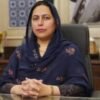
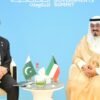
ISLAMABAD: Finance Minister Muhammad Aurangzeb says Saudi Arabia has rolled over a $3 billion deposit to Pakistan. He did not disclose how long the extension would last.
Speaking at a Senate Finance Committee meeting on Wednesday, Aurangzeb said Pakistan’s external accounts were in a “comfortable position” even without a proposed $10 billion US liquidity support package. He said the request was not a credit line or a guarantee, and that Pakistan could manage without it.
Finance Secretary Imdad Ullah Bosal told the committee that Pakistan’s gross external repayments total $21.5 billion, including $17 billion in principal and $4 billion in interest. Bilateral rollovers account for $7.3 billion, he said. Unspecified sources cited in the report attributed $4 billion to China, $3 billion to Saudi Arabia and $300 million to Kuwait.
Bosal said repayments excluding those rollovers amount to $14 billion, including $3.2 billion in commercial refinancing, which Pakistan may avoid because of its cost. The government has repaid $5 billion in the first five months of the fiscal year and expects to pay another $6 billion during the remaining seven months, he said.
The committee was also briefed on the government’s borrowing plan, which projects public debt at Rs86.7 trillion, additional borrowing of Rs6.86 trillion and gross financing needs of Rs28.65 trillion. Officials said the debt-to-GDP ratio had fallen from 75.1% in FY2023 to 68.6% in FY2026.
Aurangzeb said the government was working to improve its debt profile, reduce short-term borrowing and strengthen Pakistan’s credit standing. Officials told the panel the country could meet about $5 billion in debt-service payments over the next six months while maintaining foreign exchange reserves of $21.5 billion.
Committee chairman Senator Saleem Mandviwalla also raised parliamentarians’ difficulties in obtaining foreign currency for personal travel. He urged the State Bank to review clearance rules for politically exposed persons and requirements for lawmakers to appear in person before exchange companies despite providing valid travel documents.