KARACHI: The early removal of former Sindh Solid Waste Management Board (SSWMB) Managing Director Tariq Ali Nizamani has raised questions about administrative continuity and the Board’s long-term reform agenda.
Nizamani took charge of the Board on January 1, 2025, and served until July 6, 2026, when the Government of Sindh issued a notification ending his tenure. Under the Sindh Solid Waste Management Act, 2021, the Managing Director is appointed for an initial four-year term, with any removal before the completion of that period governed by the provisions of the law.
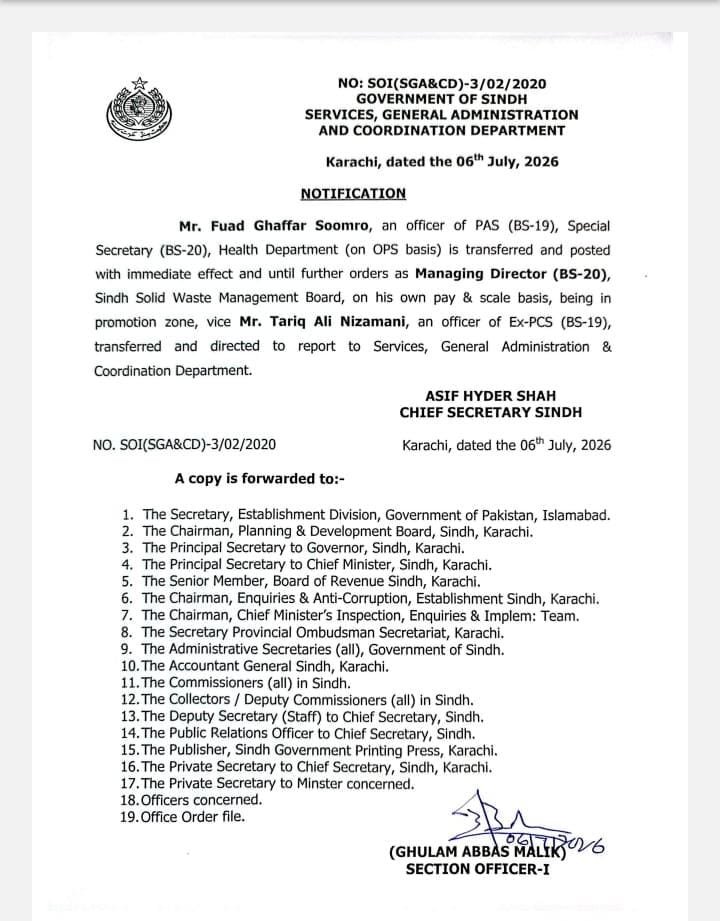
His departure came while SSWMB was being credited with a series of operational improvements. During his tenure, the Board implemented technology-based solutions, strengthened solid waste collection and landfill management, upgraded complaint handling mechanisms, expanded environmental programmes, and increased public awareness regarding sanitation and waste disposal.
The Board’s performance also received public praise from Prime Minister Shehbaz Sharif, Sindh Local Government Minister Syed Nasir Hussain Shah, and SSWMB Chairman Barrister Murtaza Wahab on various occasions. As a result, the decision to replace the Managing Director has become a topic of discussion among employees and observers, many of whom have questioned how the move may affect the continuity of ongoing reforms.
Following the leadership transition, employees and observers allege that SSWMB’s operational performance has deteriorated. They cite a rise in complaints related to waste collection, sanitation services, and overall efficiency. Media reports highlighting garbage accumulation and cleanliness issues in several areas of Karachi have further added to concerns over the Board’s current performance.
The debate has been further intensified by the dismissal of 29 daily-wage employees. According to an official notification, the terminations were carried out on the recommendations of a verification committee. The affected workers, however, dispute the decision, saying they fulfilled their responsibilities diligently and that the process lacked transparency and fairness.
The dismissed employees argue that, instead of addressing operational shortcomings and improving public services, the organization has taken action against workers whose families rely entirely on daily wages for their livelihood. They say the decision has placed dozens of households under severe financial strain.
Labour rights advocates maintain that employment-related decisions in public sector institutions should be guided by transparent procedures, objective evaluations, and equal treatment for all employees. They argue that adherence to due process is essential for maintaining institutional integrity and preserving staff confidence.
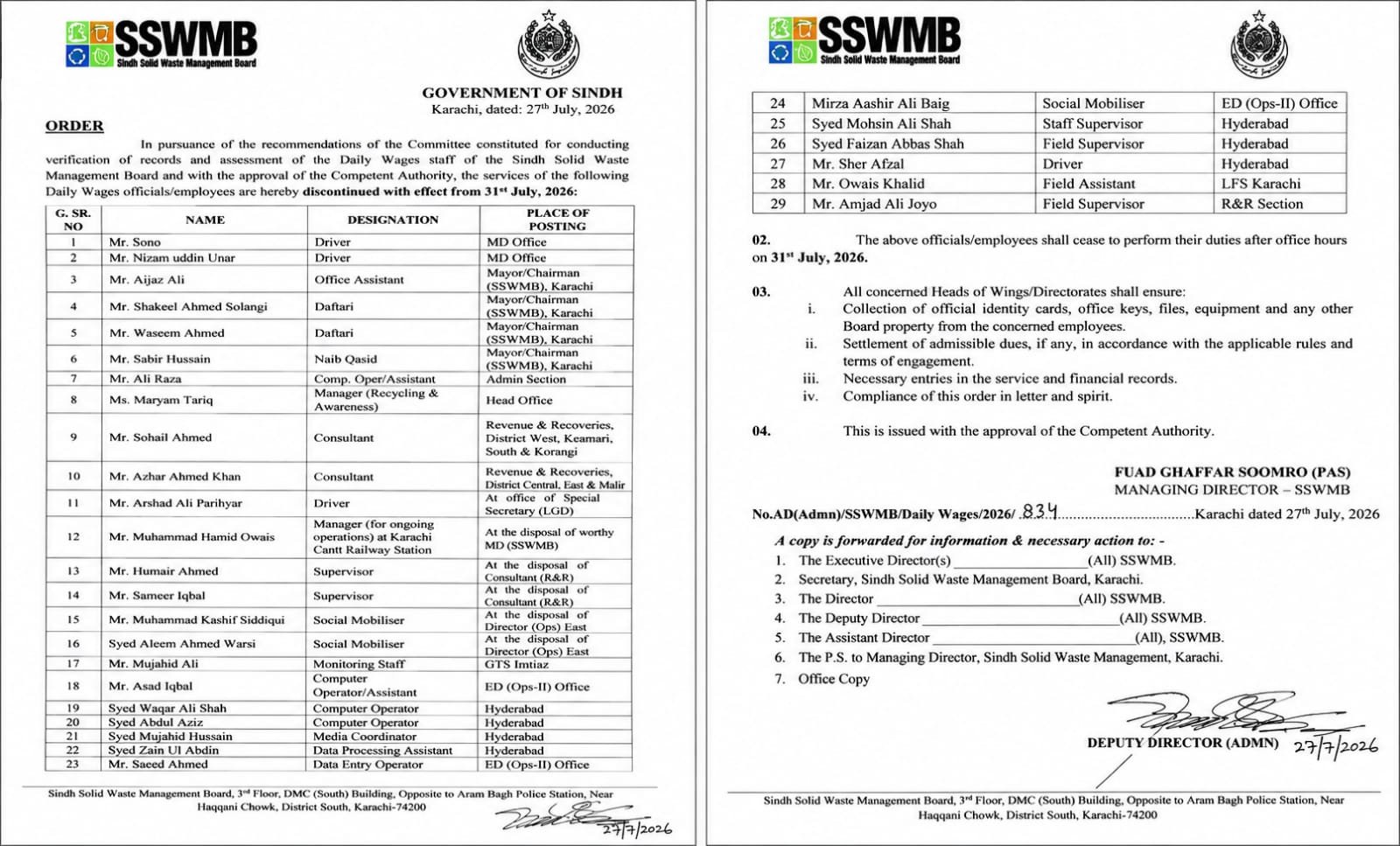
The recent developments have prompted demands for an independent assessment of the circumstances surrounding Nizamani’s removal, the Board’s operational performance following the leadership change, and the dismissal of the 29 daily-wage workers. Stakeholders say a transparent and merit-based review would help strengthen accountability and restore public trust in the institution.